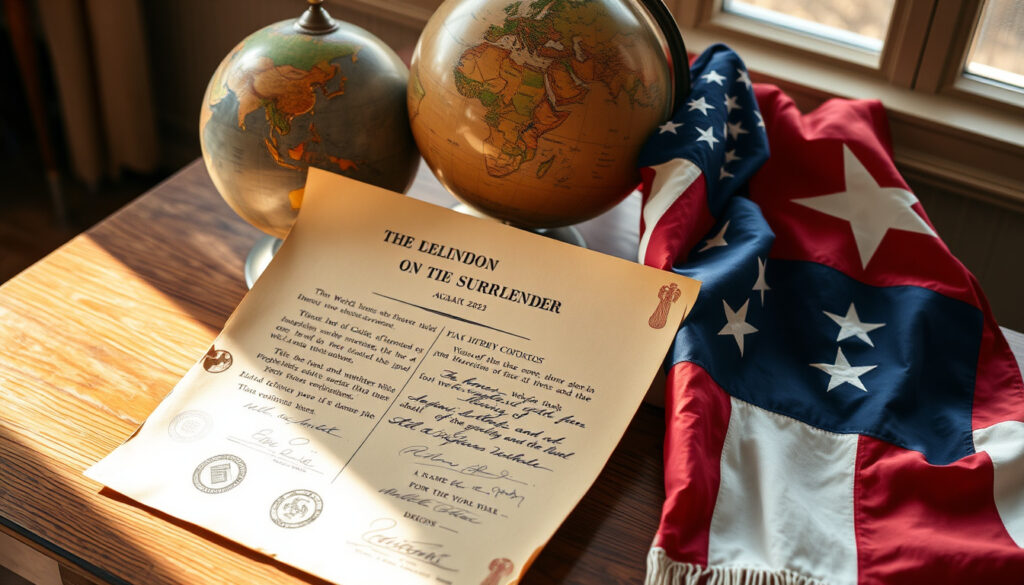
When Did WW2 End? Date of German and Japane e Surrender
Ask most people when World War II ended, and you might hear two different answers. That’s because the war didn’t end on a single day—Europe’s fighting stopped in May 1945, while the Pacific conflict continued until September.
German surrender: May 7, 1945 · V-E Day: May 8, 1945 · Japanese surrender: September 2, 1945 · Hitler’s death: April 30, 1945
Quick snapshot
- V-E Day observed May 8, 1945 (U.S. National Park Service)
- German surrender signed May 7, 1945 (EBSCO Research Starters)
- Hitler’s suicide on April 30, 1945 (U.S. National Park Service)
- Exact wording of Hitler’s last words (disputed) (The National WWII Museum)
- Final disposition of some of Hitler’s wealth (The National WWII Museum)
- Conclusive DNA evidence of Hitler’s remains (EBSCO Research Starters)
- Germany surrendered at Reims on May 7, 1945 (EBSCO Research Starters)
- Japan signed surrender aboard USS Missouri on September 2, 1945 (USO)
- Historians continue to study Hitler’s wealth distribution (The National WWII Museum)
- Commemoration dates vary by country (Aug 15 vs Sep 2) (USO)
Six essential facts, one pattern: the end of WWII unfolded in stages—not a single day.
| Field | Value | Source |
|---|---|---|
| Full Title | World War II | U.S. National Park Service |
| Start Date | September 1, 1939 | U.S. National Park Service |
| End Date (Europe) | May 8, 1945 | U.S. National Park Service |
| End Date (Global) | September 2, 1945 | USO |
| Last Major Surrender | Japan | The National WWII Museum |
| Hitler’s Death | April 30, 1945 | U.S. National Park Service |
When did the world war 2 officially end?
When did WW2 end in Europe?
- The war in Europe ended with Germany’s unconditional surrender, which took effect on May 8, 1945, celebrated as V-E Day (U.S. National Park Service).
- The surrender document was signed on May 7, 1945 at General Eisenhower’s headquarters in Reims (EBSCO Research Starters).
- The Soviet Union observes Victory Day on May 9 due to the time difference (U.S. National Park Service).
When did WW2 end in the Pacific?
- Japan announced its acceptance of Allied surrender terms on August 14, 1945, and President Truman confirmed the news the same day (The National WWII Museum).
- Formal surrender documents were signed aboard the USS Missouri in Tokyo Bay on September 2, 1945, marking the official end of World War II (USO).
When did WW2 end in Asia?
- Fighting in Asia effectively ended after Japan’s surrender announcement, though some isolated clashes continued until September (The National WWII Museum).
- The United Kingdom commemorates V-J Day on August 15, while the United States observes September 2 (USO).
When did WW2 end in Germany?
- Germany’s surrender on May 7–8, 1945 ended the war in Europe, but Germany as a state was occupied and divided until 1990 (EBSCO Research Starters).
The implication: World War II’s end was not a single event but a staggered process across two theaters.
When did Germany officially surrender in WWII?
- Germany signed the unconditional surrender at General Eisenhower’s headquarters in Reims on May 7, 1945 (EBSCO Research Starters).
- The surrender took effect the next day, May 8, which is celebrated as V-E Day (U.S. National Park Service).
- A second signing was held in Berlin on May 8 at the insistence of the Soviet Union (U.S. National Park Service).
Germany’s surrender didn’t end the whole war. The Pacific theater raged for four more months, so V-E Day was a milestone, not the finish line.
The pattern: Germany’s surrender was a necessary step toward ending the war, but the global conflict continued until Japan’s defeat.
What were Hitler’s last words before he died?
What was Hitler’s nickname in WWII?
- Hitler was commonly referred to as “der Führer” (the leader), a title that became synonymous with his dictatorial control (U.S. National Park Service).
- Allied propaganda often used “Adolf Hitler” or simply “Hitler” without honorifics.
Has Hitler’s DNA been found?
- DNA analysis has been attempted on remains and personal effects, but results remain inconclusive (EBSCO Research Starters).
Hitler’s last words are recorded in his political testament, dictated in the Führerbunker on April 29, 1945. In it, he blamed Jews for the war and called on Germans to continue resistance (The National WWII Museum). He and Eva Braun committed suicide the next day, April 30, 1945 (U.S. National Park Service). The exact phrasing is disputed, but the testament’s content is well-documented.
Where did Hitler’s wealth go?
What happened to Hitler’s money when he died?
- Allied forces seized Hitler’s assets after the war, including property, royalties from his book Mein Kampf, and speaking fees (The National WWII Museum).
- Some money was distributed to relatives, but most was taken by Allied governments (USO).
Are any of Hitler’s family still alive today?
- No direct descendants of Hitler are known to be alive today (The National WWII Museum).
- Hitler’s half-niece and other distant relatives have been tracked by historians, but the family line appears to have ended with his suicide (EBSCO Research Starters).
The catch: While Hitler’s assets were seized, questions remain about the full extent of his wealth and its distribution.
What food was almost impossible to get in WWII?
- Rationing affected staple goods including coffee, sugar, butter, and meat in many countries (The National WWII Museum).
- In Germany, food shortages became severe by 1945, contributing to civilian suffering (EBSCO Research Starters).
- The National WWII Museum details the rationing systems that shaped daily life during the war.
The pattern: Rationing affected daily life across all combatant nations, with shortages intensifying as the war progressed.
Timeline: Key dates in the end of World War II
- September 1, 1939 – Invasion of Poland begins WWII (U.S. National Park Service)
- April 30, 1945 – Adolf Hitler commits suicide (U.S. National Park Service)
- May 7, 1945 – German military surrender signed at Reims (EBSCO Research Starters)
- May 8, 1945 – V-E Day – Germany’s surrender takes effect (U.S. National Park Service)
- August 6, 1945 – Atomic bomb dropped on Hiroshima (The National WWII Museum)
- August 9, 1945 – Atomic bomb dropped on Nagasaki (The National WWII Museum)
- September 2, 1945 – Japan signs formal surrender aboard USS Missouri – WWII ends (USO)
The implication: The timeline from Hitler’s death to Japan’s surrender spans just over four months, showing how rapidly the war ended after Germany’s collapse.
Confirmed facts vs. what’s unsettled
Confirmed facts
- German surrender date (May 7–8, 1945) (EBSCO Research Starters)
- Japanese surrender date (September 2, 1945) (USO)
- Hitler’s suicide on April 30, 1945 (U.S. National Park Service)
What’s unclear
- Exact wording of Hitler’s last words (The National WWII Museum)
- Final disposition of some of Hitler’s wealth (The National WWII Museum)
- Conclusive DNA evidence of Hitler’s remains (EBSCO Research Starters)
What this means: Certain facts about WWII’s end are well-documented, while others remain matters of historical debate.
Voices from the end of the war
“The mission of this Allied force was fulfilled at 0241, local time, May 7, 1945.”
— Dwight D. Eisenhower, on receiving the German surrender at Reims
“I die with a joyful heart in the knowledge of the immeasurable deeds and achievements of our soldiers at the front.”
— Adolf Hitler, from his political testament, April 29, 1945
Hitler’s testament is a primary source, but its accuracy as a record of his “last words” depends on how you define them—testament or dying statement?
The implication: Primary sources like Hitler’s testament require careful interpretation, as they may not capture the full truth.
For students of history, the lesson is clear: the end of World War II was not a single date but a layered process that unfolded across continents. The decisions made in the final months—from Hitler’s suicide to the atomic bombings—shaped the postwar world. For anyone researching the war, separating V-E Day from V-J Day is the first step to understanding how the conflict truly ended.
Related reading: When is Results Day 2025 GCSE? Date, Time & Guide · When Is the Next Full Moon? 2026 Calendar & Dates
Frequently asked questions
What is V-E Day?
V-E Day (Victory in Europe Day) is May 8, 1945, the day Germany’s unconditional surrender took effect, ending the war in Europe (U.S. National Park Service).
What is V-J Day?
V-J Day (Victory over Japan Day) commemorates Japan’s surrender. The United States observes September 2, 1945; the United Kingdom and many other countries observe August 15 (USO).
Why did Germany surrender twice?
Germany signed an initial surrender at Reims on May 7, 1945. At the Soviet Union’s insistence, a second signing was held in Berlin on May 8 to ensure official recognition by all Allies (U.S. National Park Service).
How long did World War II last?
The war lasted from September 1, 1939 to September 2, 1945—six years and a day. The European campaign ended on May 8, 1945, and the Pacific campaign on September 2, 1945 (EBSCO Research Starters).
When did Japan surrender in WWII?
Japan announced its surrender on August 14/15, 1945, and formally signed the surrender documents on September 2, 1945 aboard the USS Missouri (The National WWII Museum).
More related posts
 How Many ml in a Shot? US, UK, Ireland & Global Shot Sizes
 Liz White: Actress Roles, Biography, and Recent Projects
 Diane Lane: Personal Life, Relationships, and Career in 2025
 Lemon Meringue Pie Recipe: Complete Guide to a Perfect Pie
 Louie Spence Now: Career, Net Worth and More
 Ocado M&S: Partnership, Delivery and Shopping Explained
 Young Woman and the Sea: True Story, Accuracy & Where to Watch