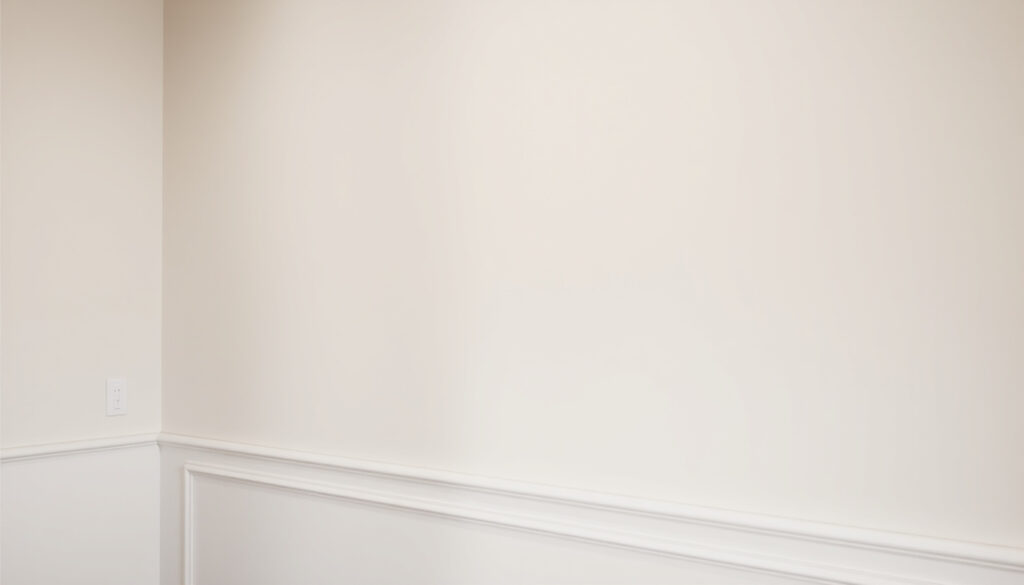
Dado Rail: Purpose, Height, Installation & Modern Ideas
You’ve probably walked past a wooden strip running across a hallway wall and wondered if it’s a practical necessity or just decoration. That strip—called a dado rail—originally protected Victorian plaster from chair backs, but today it’s staging a comeback in Irish homes, and this guide covers height rules, installation steps, and modern styling ideas so you can decide whether a dado rail fits your home.
Traditional height range: between 1/3 and 1/2 of floor-to-ceiling height ·
Typical width: 60–70mm (2.4–2.8 inches) ·
Common material: MDF, pine, or polymer ·
Historical origin: 18th-century Georgian architecture
Quick snapshot
- Traditional height range is 900–1200 mm from the floor (Skirting World (UK installation guide))
- Modern dado rails are often used to frame paint contrasts and panelling (Ideal Home (home decor magazine))
- A 2.4 m red deal dado rail costs €9.95 in Ireland (TJ O’Mahony (Irish builders’ merchant))
- Whether dado rails will remain fashionable into 2026 remains speculative (Naturewall (wall panel kit specialist) notes a comeback but no long-term projection)
- 2023: Reddit Ireland discussion signals a resurgence of dado rails in Irish homes (Reddit Ireland (home design community))
- Dado rails expected to stay popular in period properties and neo-traditional designs through 2026 (Houzz (interior design platform))
Six key facts capture the essentials of dado rail planning.
| Attribute | Detail |
|---|---|
| Also known as | Chair rail |
| Typical height from floor | 90–110 cm (36–43 inches) |
| Average length per piece | 2.4 m (8 feet) |
| Common materials | MDF, pine, polymer, hardwood |
| Period origin | 18th century Georgian architecture |
What is the purpose of dado rail?
Protecting walls from chair backs and scuffs
- Dado rails were originally installed to protect plaster walls from damage caused by chair backs, a common problem in Georgian and Victorian homes (Houzz (interior design platform)).
- The rail acts as a buffer, preventing scuffs and marks from furniture and foot traffic along the lower wall area (Naturewall (wall panel kit specialist)).
Adding visual interest and architectural detail
- Today, dado rails are primarily used as a decorative feature to divide walls into two zones and add character (Houzz (interior design platform)).
- Paint contrasts above and below the rail create a sense of proportion and depth without needing full panelling (MR Mouldings (mouldings specialist)).
Marking the division between lower and upper wall
- The rail visually splits the wall at roughly one-third height, echoing classical architectural proportions (MR Mouldings (mouldings specialist)).
- This division can make ceilings feel higher when the upper section is painted in a light colour (Naturewall (wall panel kit specialist)).
A dado rail is more than trim—it’s a cheap way to invent architectural history in a modern house. For €10–€20 per 2.4 m length, you rewrite the room’s proportions.
The implication: a dado rail solves both a durability problem and a design blank canvas. The same strip that kept chairs from marking plaster now gives you permission to paint, contrast, and frame.
Are dado rails old fashioned now?
Perception in contemporary interior design
- Dado rails are not inherently dated—their appeal depends heavily on styling choices (Houzz (interior design platform)).
- In period properties, they feel authentic; in minimalist modern homes, they can clash if not paired thoughtfully (Naturewall (wall panel kit specialist)).
Room types where they still work
- Hallways, dining rooms, and living rooms in traditional or modern farmhouse schemes often benefit from a dado rail (Ideal Home (home decor magazine)).
- Bedrooms work well when the rail sits above the headboard height, creating a frame for the bed (Houzz (interior design platform)).
Modern styling tips to avoid dated look
- Paint the rail the same colour as the wall for a subtle architectural line, or choose a bold contrast for a statement (Houzz (interior design platform)).
- Avoid heavy floral wallpaper or dark varnished wood above the rail, which can lean Victorian (Naturewall (wall panel kit specialist)).
It’s not the rail that looks dated—it’s what you put with it. Light tones, simple furniture, and no fussy wallpaper keep a dado rail current.
The pattern: a dado rail is a neutral tool. Vintage or modern depends entirely on paint palette and home style. An owner of a 1970s Dublin semi-d can freshen the room with a white rail and pale grey walls; a Cork period home can lean into heritage with a richer tone below.
How high should a dado rail go?
Standard height formula (one third of wall height)
- The most widely recommended formula is to place the rail at roughly one-third of the wall height (Naturewall (wall panel kit specialist)).
- For a standard 2.4 m ceiling, that places the rail around 800–900 mm from the floor (Houzz (interior design platform)).
- Skirting World advises a range of 900–1200 mm, depending on ceiling height and use (Ideal Home (home decor magazine)).
Exceptions for low ceilings or high ceilings
- For low ceilings (under 2.3 m), consider placing the rail slightly lower than one-third to avoid chopping the room (MR Mouldings (mouldings specialist)).
- In rooms with high ceilings, the rail can sit at one-third height or even higher for a more dramatic effect (Skirting World (UK installation guide)).
- Aligning the rail with window sills or door frames creates a coherent horizontal line (Naturewall (wall panel kit specialist)).
Measuring and marking correctly
- Measure from the floor up at multiple points and use a spirit level to ensure the line is straight (Naturewall (wall panel kit specialist)).
- Consider furniture heights—a bed headboard or sofa should sit comfortably above the rail (Houzz (interior design platform)).
The trade-off: following the one-third rule is safe, but breaking it—rail higher or lower—can deliver a unique interior. The key is to test the line with masking tape before cutting.
What can I use instead of a dado rail?
Trim or moulding alternatives
- Picture rail: a moulding placed high on the wall (just below the ceiling) used to hang artwork or frame the upper wall (Ideal Home (home decor magazine)).
- Decorative profile trim: narrower strips that mimic a dado rail but in a lighter profile, suitable for modern settings (Naturewall (wall panel kit specialist)).
Wall panelling and wainscoting
- Full wainscoting (wood panelling from floor to mid-wall) creates a more dramatic effect and protects walls fully (Houzz (interior design platform)).
- Raised or flat wall panels can be combined with a dado rail for a tailored look (MR Mouldings (mouldings specialist)).
Picture rail or coving options
- Coving at ceiling level provides a different architectural line and can be paired with a dado rail for layered detailing (Skirting World (UK installation guide)).
- Beading or chair rail (the same thing as a dado rail) is the only true alternative name (Naturewall (wall panel kit specialist)).
Why this matters: each alternative changes the visual weight on the wall. A picture rail keeps attention upward; wainscoting adds substantial texture. The choice depends on whether you want subtle or bold.
How to fit a dado rail
Tools and materials needed
- Dado rail lengths (MDF, pine, or polymer), measuring tape, spirit level, pencil, mitre saw or mitre box, construction adhesive, 40 mm finishing nails, hammer or nail gun, wood filler, sandpaper (MR Mouldings (mouldings specialist)).
- Optional: caulk gun, paintable caulk, paint for touch-ups.
Cutting and joining corners
- Measure wall lengths and cut rail sections with a 45-degree mitre for external and internal corners (Skirting World (UK installation guide)).
- For long runs, join two pieces with a scarf joint (overlapping 45-degree cut) to hide the seam (Naturewall (wall panel kit specialist)).
Fixing methods (nail, glue, or screw)
- Apply construction adhesive to the back of the rail, press firmly against the wall at the marked height, and secure with 40 mm finishing nails driven into wall studs or plugs (Houzz (interior design platform)).
- Check alignment with a spirit level before adhesive sets; adjust as needed (Ideal Home (home decor magazine)).
- Fill nail holes with wood filler, sand smooth once dry, and paint to match wall or contrast (Naturewall (wall panel kit specialist)).
- Measure and mark the height using a spirit level.
- Cut dado rail sections with a mitre saw at 45 degrees for corners.
- Apply construction adhesive and fix with finishing nails.
- Fill nail holes, sand, and paint.
The pattern: fitting a dado rail is a weekend job that transforms a plain wall into a designed space. The hardest part is getting the height right—everything else is straight cuts and adhesive.
Six specification points summarise the physical choices.
| Specification | Value / Options |
|---|---|
| Typical height from floor | 800–1200 mm (adjustable by preference) |
| Width (moulding) | 45 mm, 55 mm, 65 mm |
| Length per piece | 2.4 m (8 ft) – longer runs need joins |
| Material choices | MDF (cheapest, stable), pine (traditional), polymer (moisture-resistant) |
| Fixing methods | Adhesive + nails; screws + plugs on masonry walls |
| Paint finish recommended | Eggshell or satin for wipe-ability |
| Corner type | Mitred (45°) internal & external |
| Price range (2.4m length) | €7.70 – €20 depending on material |
Upsides
- Adds architectural detail at low cost
- Protects walls from scuffs and furniture
- Easy DIY install—no specialist skills needed
- Flexible styling: one colour or two-tone
- Widely available at Irish builders’ merchants
Downsides
- Can look old-fashioned if paired with dark wood or heavy wallpaper
- Collects dust on the top edge
- May not suit open-plan minimalist interiors
- Requires accurate cutting for neat corners
- Fixing to plasterboard needs wall plugs or adhesive
Clarity: what’s confirmed vs what’s still unclear
Confirmed
- Dado rail is also called chair rail (Ideal Home (home decor magazine))
- Standard height is about one third of wall height (Naturewall (wall panel kit specialist))
- Can be fitted with nails and adhesive (Houzz (interior design platform))
What’s unclear
- Exact year of origin is not precisely documented (sources broadly cite 18th century)
- Whether the trend will sustain beyond 2026 is speculative
What stands: the historical record is broad but not precise; the future is always speculative. Take the confirmed facts and build from there.
Expert perspectives on dado rails
“A dado rail is a horizontal moulding fixed to the wall around 90–110 cm above the floor. It was originally used to protect plaster from chair backs and now serves as a decorative feature.”
“Measure the room height, apply the rule of thirds, and check furniture height before fixing. Always double-check with a spirit level before the adhesive sets.”
MR Mouldings (mouldings specialist)
“Modern dado rail styling works well paired with half-height wall panelling kits. In hallways, align the rail with the bannister for a coherent line.”
Naturewall (wall panel kit specialist)
The consensus from three different voices: start with the rule of thirds, align to existing lines, and keep the palette modern.
For any homeowner weighing style against practicality, the choice is clear: a dado rail gives you a cheap architectural upgrade with real wall protection. If you are willing to paint and keep the palette simple, it will not feel outdated. If your home is a period property, it is a fitting restore. For a modern Dublin apartment, skip the rail if you want clean minimalism—or use it as a bold colour barrier.
covingdirect.ie, llcompany.co.uk, chadwicks.ie, youtube.com, etsy.com
For a more detailed breakdown of materials and where to buy, check this comprehensive dado rail guide that also covers pricing and step-by-step fitting tips.
Frequently asked questions
Can I fit a dado rail myself?
Yes, most homeowners with basic DIY skills can install a dado rail using adhesive and finishing nails. Complex corners may require a mitre saw and careful measuring (MR Mouldings (mouldings specialist)).
Do I need to remove skirting board before fitting dado rail?
No, the dado rail sits above the skirting board and does not interfere. They are separate elements (Naturewall (wall panel kit specialist)).
Should dado rail and skirting board match?
They can match in colour or contrast. A matching white finish is common, but using the same wood profile creates a harmonious look (Ideal Home (home decor magazine)).
Can I use dado rail in a bathroom?
Yes, especially polymer or moisture-resistant MDF. Ensure good ventilation to prevent mould behind the rail (Houzz (interior design platform)).
What paint finish is best for dado rail?
Eggshell or satin finishes are durable and wipeable. Matte can be used but may show marks more easily (Skirting World (UK installation guide)).
How do I fix a loose dado rail?
Apply construction adhesive behind the rail, press tight, and secure with additional nails. Use a clamp if needed (Naturewall (wall panel kit specialist)).
Does dado rail add value to a house?
In period properties it can enhance character and perceived authenticity. In modern homes, it is neutral—not a value-add but not a deterrent if well styled (MR Mouldings (mouldings specialist)).
More related posts
 AS Monaco vs Man City Lineups: Confirmed Starting XI and Recap
 Regis Prograis Retires After Loss to Conor Benn: Career Update
 Houses for Sale Durham – $399K Prices and Trends 2026
 Van Cleef and Arpels – History Ownership Collections Guide
 Shaun Wright-Phillips – Career Stats Family Legacy
 Steve McManaman: Liverpool Exit, Real Madrid Trophies & Net Worth
 Dollars to Pounds Converter: Live USD to GBP Rates