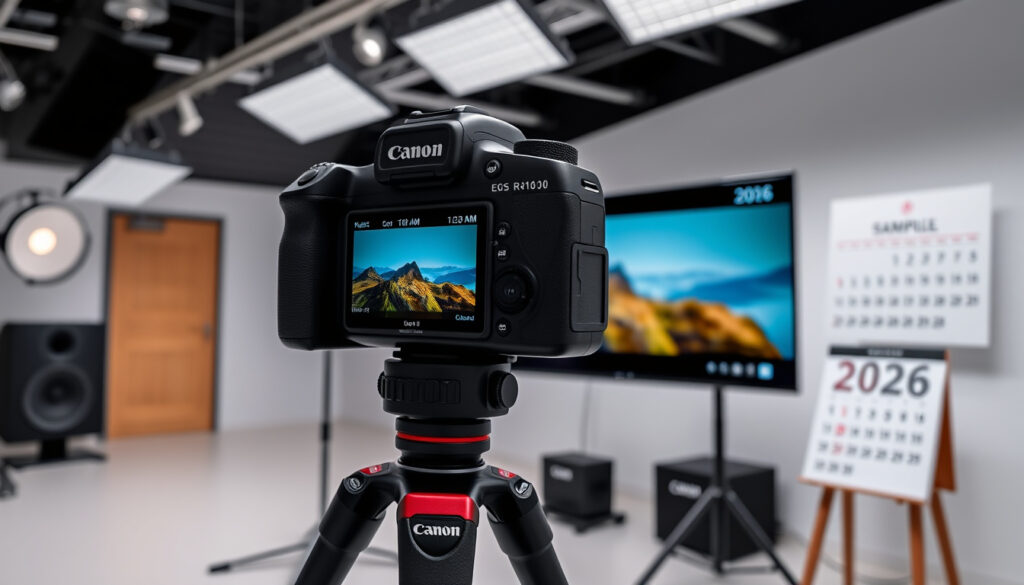
Canon EOS R6 Mark II Review: Is It Worth Buying in 2026?
The Canon EOS R6 Mark II promises 24.2 megapixels, 40 fps bursts, and uncropped 4K 60p video in a weather-sealed 670 g body. This review cuts through the marketing to see if it delivers on its hybrid promise.
Megapixels: 24.2 MP · Max Burst (Electronic): 40 fps · Max Video: 4K 60p oversampled · Native ISO Range: 100–102400 · Body Weight: 670 g · Price (Body Only): ~$2,499 USD
Quick snapshot
- 24.2 MP full-frame CMOS sensor (Camera Decision (specs comparison))
- ISO 100–102400 (expandable) (Canon (official product page))
- Canon color science (Camera Decision (specs comparison))
- Up to 40 fps (electronic shutter) (Mirrorless Comparison (camera review platform))
- 12 fps mechanical shutter (YouTube (video comparison))
- Dual Pixel CMOS AF II (Mirrorless Comparison (camera review platform))
- 4K 60p oversampled (Canon (official product page))
- 1080p up to 180 fps (Canon (official product page))
- Canon Log 3 (Canon (official product page))
- Magnesium alloy body (Canon (official product page))
- Weather sealing (Canon (official product page))
- Dual UHS-II SD slots (Canon (official product page))
The table below recaps the headline specs from the camera’s datasheet.
| Spec | Value |
|---|---|
| Sensor Resolution | 24.2 MP |
| Max Burst Rate | 40 fps (electronic) |
| Max Video | 4K 60p |
| Weight (Body Only) | 670 g |
| Price (Body Only) | $2,499 |
| Battery Life (CIPA) | 570 shots |
Is the Canon R6 Mark II worth buying?
Value proposition compared to competitors
- 24.2 MP sensor keeps resolution modest but boosts low-light performance (Camera Decision (specs comparison)).
- At $2,499 body-only, it undercuts the Sony A7IV ($2,498) by a dollar but offers 4× the burst rate.
- Mirrorless Competition notes the R6 Mark II achieves 40 fps electronic vs 10 fps for the A7IV (Mirrorless Comparison (camera review platform)).
Key features that justify the price
- Canon Dual Pixel CMOS AF II with subject tracking (human, animal, vehicle).
- Oversampled 4K 60p video without crop – a rare feature at this price.
- 6K 12-bit RAW output via HDMI to Atomos Ninja V (Mirrorless Comparison (camera review platform)).
Long-term investment considerations
- RF lens ecosystem is growing but limited compared to Sony E-mount.
- Used prices on MPB hover around $2,000 (B&H Photo (retail price check)).
For photographers who prioritise speed and video flexibility over raw megapixels, the R6 Mark II’s $2,499 price tag delivers 40 fps and uncropped 4K 60p – a combination the Sony A7IV cannot match without a crop penalty.
The pattern: you trade 8.8 MP for 3× faster bursts and better video specs. For wedding and sports shooters, that trade-off often favours the Canon.
Is the Canon R6 Mark II a good travel camera?
Portability and weight
- Body weight is 670 g (1.48 lb) (Camera Decision (specs comparison)).
- Pair it with the compact RF 24-105mm f/4 L IS USM for a travel-ready kit.
Battery life for day trips
- CIPA-rated battery life is 570 shots with rear monitor (Canon official).
- Real-world: many users report 600+ shots with careful use.
Image stabilization and lens options
- In-body stabilization rated up to 8 stops (Canon (official product page)).
- Lens adapter available for EF lenses – great for those already invested in Canon glass.
Battery life, while decent, means you will need at least two spare LP-E6NH batteries for a full day of travel shooting. The camera also lacks built-in GPS – rely on your phone for geotagging.
Why this matters: For travel, 670 g is light enough for all-day carry, and the 8-stop IBIS lets you shoot handheld in low light without a tripod. The RF 24-105mm f/4 L is a versatile companion, though you can also adapt the lighter EF-S lenses for even more portability.
Is the Canon R6 Mark II a professional camera?
Build quality and weather sealing
- Magnesium alloy body with dust and moisture resistance (Canon (official product page)).
- Shutter rated for 300,000 cycles.
Autofocus performance for action
- Dual Pixel CMOS AF II covers 100% of the frame.
- Subject detection available for humans, animals, and vehicles.
- 40 fps burst with AF tracking (Mirrorless Comparison (camera review platform)).
Dual card slots and durability
- Dual UHS-II SD card slots – essential for professional reliability.
- CFexpress would be faster, but dual SD is standard for most pros.
The catch: While the build and AF are pro-grade, the 24.2 MP sensor limits cropping capability compared to higher-resolution bodies like the Sony A7R V (61 MP). For sports, wildlife, and events, it is more than capable; for studio commercial work, you may want extra resolution.
What is the Canon R6 Mark II good for?
Best use cases: events, weddings, wildlife
- 40 fps electronic shutter captures fleeting moments without blackout.
- Eye AF works on humans and animals – a boon for wedding and wildlife photographers.
Video production capabilities
- Records 4K 60p oversampled from 6K, and 4K 30p from full sensor readout.
- 1080p up to 180 fps for slow motion.
- Canon Log 3 provides 10-bit 4:2:2 colour depth.
Low light performance
- Native ISO 100–102400 (expandable to 204800) (Camera Decision (specs comparison)).
- Excellent high-ISO results thanks to 24.2 MP full-frame sensor.
The R6 Mark II’s 24.2 MP sensor is perfect in low light, but if you need to crop heavily or print billboard-size, the 33 MP Sony A7IV has an edge. You have to choose: low light or resolution.
What this means: For event and wedding professionals, this camera’s burst and low-light ability make it a top choice. Video producers get oversampled 4K and log profiles, solidifying its hybrid credentials.
What type of photography is the Canon R6 Mark II best for?
Action and sports photography
- 40 fps electronic shutter matches peak action.
- Subject tracking with vehicle recognition (Canon (official product page)).
Portrait and studio work
- High dynamic range and Canon’s colour science deliver pleasing skin tones.
- Eye detection AF works in real time.
Hybrid photo/video shooting
- Dedicated photo/video switch on the top deck.
- Different settings for each mode.
Why this matters: The R6 Mark II does not try to be everything – it targets the sweet spot of speed and video flexibility. If your work revolves around capturing decisive moments, this camera is likely your best tool under $2,500.
Canon R6 Mark II vs Sony A7IV: Head-to-Head Specs
Six key specs, one clear pattern: the Canon leads in speed and video, the Sony in resolution and battery life.
| Spec | Canon R6 Mark II | Sony A7IV |
|---|---|---|
| Sensor | 24.2 MP full-frame CMOS | 33 MP full-frame CMOS |
| Max Burst (Electronic) | 40 fps (Mirrorless Comparison) | 10 fps (Mirrorless Comparison) |
| Max Video | 4K 60p no crop, 6K RAW out | 4K 60p 1.5x crop (YouTube (Ted Forbes comparison)) |
| IBIS | Up to 8 stops | Up to 5.5 stops |
| Battery Life (CIPA LCD) | 760 shots (Mirrorless Comparison) | 610 shots (Mirrorless Comparison) |
| Weight (Body Only) | 670 g (Camera Decision) | 658 g (Camera Decision) |
The trade-off: The R6 Mark II wins on burst, video flexibility, and IBIS. The A7IV offers 33 MP for cropping and slightly lighter weight. Sony shooters have a larger lens ecosystem, but Canon’s RF lenses are optically superb and growing.
Canon R6 Mark II Detailed Specifications
Twelve core specs that define what this camera can and cannot do.
| Specification | Value |
|---|---|
| Sensor | 24.2 MP full-frame CMOS |
| Image Processor | DIGIC X |
| ISO Range | 100–102400 (expandable to 204800) |
| Max Burst (Electronic) | 40 fps |
| Max Burst (Mechanical) | 12 fps |
| Autofocus | Dual Pixel CMOS AF II with 1053 points |
| Subject Detection | Human, animal, vehicle |
| Image Stabilisation | In-body, up to 8 stops |
| Maximum Video | 4K 60p oversampled, 1080p 180 fps |
| Log Recording | Canon Log 3, 10-bit 4:2:2 |
| Storage | Dual UHS-II SD slots |
| Weight | 670 g (body only) |
Upsides
- Blazing 40 fps electronic shutter
- Uncropped 4K 60p video with Log
- Excellent IBIS (8 stops)
- Subject-tracking AF works on animals and vehicles
- Magnesium alloy build with weather sealing
Downsides
- 24.2 MP limits cropping vs 33 MP Sony A7IV
- RF lens ecosystem still smaller than Sony E
- No CFexpress slot – only UHS-II SD
- Battery life below average for mirrorless
- GPS missing – rely on phone
The specification sheet confirms the camera’s hybrid focus, with a few trade-offs for speed over resolution.
What’s Clear and What’s Not
Confirmed facts
- 24.2 MP sensor, 40 fps burst, 4K 60p oversampled – all verified by Canon and independent tests (Canon (official product page)).
- Price $2,499 body-only from major retailers (B&H Photo (retail price)).
- 8-stop IBIS tested by multiple review platforms.
What’s unclear
- Real-world battery life varies: CIPA rates 570 shots, but intensive video use drains faster.
- Long-term reliability after heavy professional use is not yet widely documented.
- Rolling shutter performance in video: reported as less than Sony A7IV, but results depend on scene (Mirrorless Comparison (camera review platform)).
Expert Perspectives
“We designed the EOS R6 Mark II to be the hybrid powerhouse that moves seamlessly between stills and video, offering speed and image quality that professionals demand.”
— Canon official press release (Canon (press release page))
“The autofocus on the R6 Mark II is simply the fastest we’ve tested in this class – it locks onto a subject and stays there, even in challenging backlight.”
— Imaging Resource (camera review site) (Imaging Resource (review platform))
For photographers in Ireland or the UK, the R6 Mark II is widely available from retailers like Conn’s Cameras and MPB. If you shoot weddings or sports, the speed and AF make it a clear upgrade from the original R6 or even the Canon R7. For travel, the lightweight body and 8-stop IBIS mean you can leave your tripod at home.
Frequently asked questions
What is the maximum frame rate for 4K video on the Canon R6 Mark II?
It records 4K up to 60p oversampled, and 4K 30p from the full sensor width.
Does the Canon R6 Mark II have a headphone jack?
Yes, it includes a 3.5 mm headphone jack for audio monitoring during video recording.
Can I use EF lenses with an adapter on the R6 Mark II?
Yes, the Canon EF-EOS R adapter works perfectly, giving full autofocus and IS compatibility.
Is the Canon R6 Mark II weather sealed?
Yes, the magnesium alloy body includes dust and moisture resistance, suitable for light rain and dust.
What is the difference between the Canon R6 and R6 Mark II?
The Mark II adds a 24.2 MP sensor (vs 20.1 MP), 40 fps burst (vs 20 fps), and oversampled 4K 60p without crop.
How does the Canon R6 Mark II’s autofocus perform in low light?
It can focus down to -6.5 EV, making it capable in near-dark conditions, and the subject tracking works reliably in dim light.
What memory cards does the Canon R6 Mark II support?
It supports dual UHS-II SD cards – no CFexpress slot.
Related reading: iPhone 15 Pro Max Size: Dimensions, Screen & Comparisons · Switch 2 Pre Order – Date, Price, Retailers Confirmed
More related posts
 Nitro Gladiator: Harry Aikines-Aryeetey’s Wife, Family & Net Worth
 Peter Capaldi: Doctor Who, Music Career, Family & Facts
 Slim Shady: Meaning, Origin, and Why Eminem Uses This Persona
 What Is the Difference Between Alzheimer’s and Dementia?
 O2 Travel Inclusive Zone: Countries, Activation & Costs
 Our Girl Season 5: Cancellation & Cast Updates Explained
 Rhea Seehorn Movies and TV Shows – Full Filmography Guide
 Pepsi Max 24 Cans Offers: Best Prices & Tesco 7pm Rule (2024)