Deadpool Creator Rob Liefeld – Origins Role and Facts
Rob Liefeld stands as one of the most influential yet polarizing figures in modern comic book history. Born on October 3, 1967, in Anaheim, California, this self-taught artist reshaped Marvel’s mutant titles in the early 1990s before co-founding Image Comics to champion creator ownership.
His most enduring contribution to popular culture remains the co-creation of Deadpool, the mercenary who evolved from a minor villain into a multimedia phenomenon. While frequently associated with the character’s distinctive visual design, Liefeld’s role in Deadpool’s genesis involves a complex collaboration that has sparked decades of discussion regarding creative credit in the comics industry.
Who Created Deadpool?
- Collaborative creation: Liefeld handled pencils, inks, and plotting for Deadpool’s debut, while Fabian Nicieza provided dialogue.
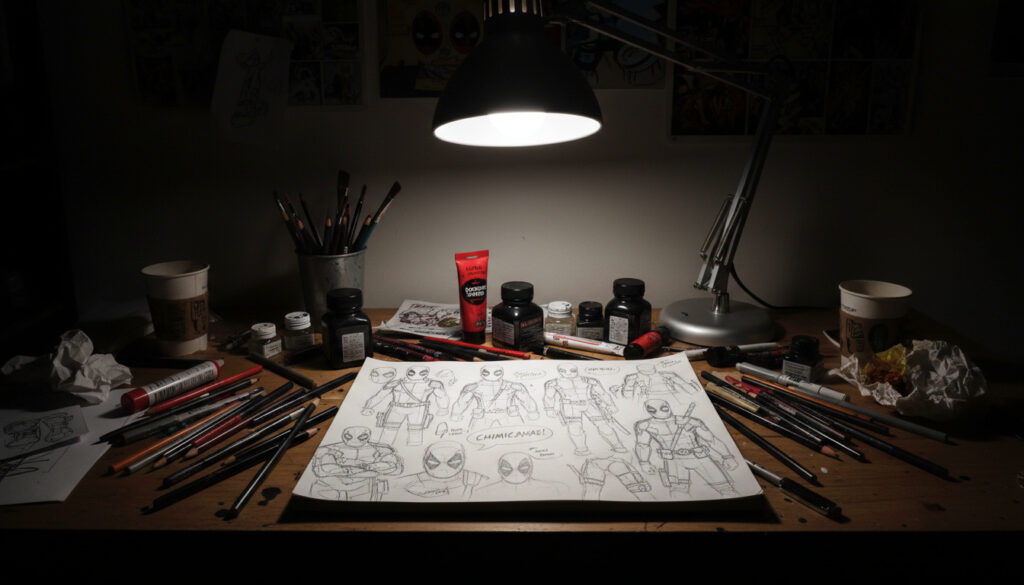
- Visual origin: The character’s design emerged from Liefeld’s distinctive aesthetic, featuring heavy weaponry and exaggerated musculature.
- Initial role: Deadpool first appeared as a villain in New Mutants #98, not as the antihero known today.
- Shared credit: Industry standards recognize both Liefeld and Nicieza as co-creators despite disputes over individual contributions.
- Immediate impact: The issue also introduced Shatterstar and set the stage for the X-Force transformation.
- Production scale: Liefeld assumed full creative control over the visual storytelling and layout of the debut issue.
| Fact | Details |
|---|---|
| Full Name | Robert Liefeld |
| Born | October 3, 1967 (Anaheim, California) |
| Deadpool Debut | The New Mutants #98 (1991) |
| Co-creator (Writer) | Fabian Nicieza |
| Other Major Creations | Cable, Shatterstar, Youngblood |
| Image Comics Role | Co-founder (1992) |
| Notable Run | New Mutants #86-100, X-Force #1 |
What Is Rob Liefeld Known For?
Early Career and Reinvention at Marvel
Liefeld began his professional journey with Marvel on The Amazing Spider-Man Annual #23 before assuming penciling duties for The New Mutants starting with issue #86 in 1989. His dynamic, muscular art style quickly distinguished him within the industry, transforming a low-selling title into a commercial success. During this run, he co-created Cable with writer Louise Simonson, designing the character as a heavily armed cyborg with a glowing eye to serve as the team’s new leader.
Image Comics and the Creator Rights Movement
In 1992, Liefeld joined six other high-profile artists—Jim Lee, Todd McFarlane, Erik Larsen, Whilce Portacio, Jim Valentino, and Marc Silvestri—to establish Image Comics. The collective aimed to allow creators to maintain ownership of their intellectual property, challenging traditional work-for-hire arrangements dominating the industry. Liefeld operated under the banner of Extreme Studios, launching Youngblood #1 as the company’s debut title. This series originated partially from a rejected Teen Titans pitch Liefeld had previously developed for DC Comics.
Image Comics represented a fundamental shift in the comics industry, enabling artists to retain rights to characters they created. Liefeld’s Extreme Studios produced Youngblood under this model, establishing a precedent for independent publishing that influenced subsequent generations of creators exploring ventures like Michelle Fairley Movies and TV Shows and other media adaptations.
When and Where Did Deadpool First Appear?
The Debut in New Mutants #98
Deadpool first appeared in The New Mutants #98, published in 1991. Liefeld assumed full creative control over the issue, handling pencils, inks, and plotting. The character initially served as a villain hired to attack the nascent X-Force team. The same issue introduced Shatterstar, another character who would become integral to Liefeld’s X-Force mythology.
The Division of Creative Labor
While Liefeld managed the visual storytelling and plot structure, Fabian Nicieza contributed the dialogue and further characterization. The partnership extended through New Mutants #98-100, concluding the series with issue #100 before transitioning the team into X-Force #1. That subsequent launch sold four million copies, setting an industry record later surpassed only by X-Men #1.
In the 1991 debut, Liefeld and Nicieza co-plotted the story, with Liefeld executing all visual elements. Nicieza’s scripting provided the verbal characterization that distinguished Deadpool from other mercenary archetypes, establishing the foundation for the character’s later evolution into the “Merc with a Mouth.”
Rob Liefeld’s Career Highlights and Controversies
Beyond Deadpool: X-Force and Cable
Following the transformation of New Mutants into X-Force, Liefeld’s work on X-Force #1 cemented his status as a top-tier talent capable of driving massive sales. He reunited with Nicieza in 2004 for an X-Force limited series and contributed early covers to Nicieza’s Cable & Deadpool run. That same year, Liefeld formed Arcade Comics to revive Youngblood, releasing Youngblood: Bloodsport (featuring one issue with Mark Millar) and Youngblood: Genesis (with Brandon Thomas).
Production Issues and Credit Disputes
Liefeld remains a controversial figure within comics discourse. Critics frequently cite his anatomical style—characterized by exaggerated musculature, diminutive feet, and excessive pouch detailing—as divisive. Production problems also marked his tenure; in 1993, he publicly labeled Youngblood #1-4 a “disaster,” attributing the failures to collaborator Hank Kanalz’s scripting rather than accepting responsibility. Critic Peter David highlighted this deflection as evidence of accountability issues, contrasting these problems with Liefeld’s more successful collaborations with writers like Nicieza and Louise Simonson.
In a 2016 New York Times interview, Liefeld claimed he performed “all the heavy lifting” in creating Deadpool, suggesting that industry conventions automatically credit scripters as co-creators regardless of contribution level. This assertion generated significant debate regarding the relative importance of visual design versus narrative development in character creation.
How Did Rob Liefeld’s Career Develop Over Time?
- : Began penciling New Mutants starting with issue #86; co-created Cable with Louise Simonson.
- : New Mutants #98 debuted Deadpool and Shatterstar; co-plotted with Fabian Nicieza; launched X-Force #1 (4 million copies sold).
- : Co-founded Image Comics; released Youngblood #1 through Extreme Studios.
- : Publicly criticized Youngblood #1-4 production quality, sparking industry debate.
- : Reunited with Nicieza for X-Force limited series and Cable & Deadpool covers; established Arcade Comics.
- : Asserted primary credit for Deadpool’s creation in national media interview.
What Facts Are Definitive About Deadpool’s Creation?
Established Information
- Rob Liefeld designed Deadpool’s visual appearance and initial concept.
- Fabian Nicieza wrote the dialogue and contributed to characterization.
- Both creators are officially credited as co-creators by Marvel.
- Deadpool first appeared in New Mutants #98 (1991).
Points of Dispute
- The relative percentage of creative contribution between artist and writer.
- Whether dialogue scripting constitutes equal creation status.
- Liefeld’s specific claims regarding “heavy lifting” versus collaborative norms.
Why Does Rob Liefeld Matter to Comic Book History?
Liefeld’s influence extends beyond individual characters to structural changes within the publishing industry. His role in establishing Image Comics created a viable alternative to traditional superhero publishers, enabling creators to retain ownership of their work. This paradigm shift influenced contract negotiations throughout the 1990s and established templates for independent comic publishing that persist today.
While his artistic style generates polarized reactions, his impact on creator rights and the commercial potential of Deadpool as a multimedia property remains undeniable. The character’s transition from comic book villain to film franchise headliner traces back to Liefeld’s initial visual conception and the commercial momentum he generated during the speculative boom of the early 1990s.
What Do Primary Sources Say About These Events?
“I did all the heavy lifting… The industry norm is that the scripters are credited as co-creators. That’s the way it works.”
— Rob Liefeld, The New York Times (2016)
Marvel Fandom documentation aligns with collaborative credit standards, noting both Liefeld and Nicieza as essential to the character’s initial conception. Biographical sources confirm Liefeld’s self-taught background and his rapid ascent within Marvel’s ranks during the late 1980s and early 1990s.
What Is the Essential Summary of Rob Liefeld’s Role?
Rob Liefeld co-created Deadpool alongside writer Fabian Nicieza, providing the visual design and plot structure for the character’s 1991 debut in New Mutants #98. His career encompasses significant achievements including the co-founding of Image Comics and the creation of Cable, alongside controversies regarding production quality and credit attribution. While debates persist regarding the precise division of creative labor, Liefeld’s position as the artist who designed one of modern comics’ most recognizable characters remains firmly established. His work continues to influence discussions about creator rights and artistic style in sequential art, connecting to broader media trends seen in productions like Interview with the Vampire (TV Series).
Frequently Asked Questions
What did Rob Liefeld contribute to Deadpool?
Liefeld handled the visual design, pencils, inks, and plotting for Deadpool’s debut in New Mutants #98, creating the character’s distinctive appearance and weaponry.
Did Rob Liefeld write Deadpool stories?
While Liefeld plotted the initial appearance, Fabian Nicieza provided the dialogue and scripting. Liefeld did not traditionally write the dialogue for early Deadpool comics.
Where can I read the first Deadpool comic?
Deadpool first appeared in The New Mutants #98 (1991), written by Fabian Nicieza and drawn by Rob Liefeld.
Who else worked with Liefeld on early Deadpool?
Fabian Nicieza served as the primary collaborator, providing dialogue and co-plotting the initial story arc that introduced the character.
What other characters did Rob Liefeld create?
Besides Deadpool, Liefeld co-created Cable, Shatterstar, and the team Youngblood, among others.
When did Rob Liefeld leave Marvel?
Liefeld departed Marvel in 1992 to co-found Image Comics, though he has returned for various limited series and cover work in subsequent years.
Is Rob Liefeld still involved with Image Comics?
While Liefeld co-founded Image Comics in 1992 and operated Extreme Studios, he has since left and rejoined the collective multiple times throughout his career.
More related posts
 Buy Me a Coffee – 2025 Setup, Fees and Alternatives Guide
 Cast of The 100: Actors, Characters, Seasons Breakdown
 Edgy Messy Short Pixie Cut – Styling Guide for 2025
 Best Dog Advent Calendar 2025 UK: Top Picks & Reviews
 Daryl Dixon: LGBTQ, Autism, Seasons, Rick Alive Answered
 Glasgow Christmas Market 2025 – Dates, Tickets, Times and Locations
 Deportivo Alavés vs Real Madrid Standings: H2H Record
 FBI (TV Series): Cast, Maggie Exit, Season 9 Renewal